
When: Thursday, 12–4 pm
SYLLABUS
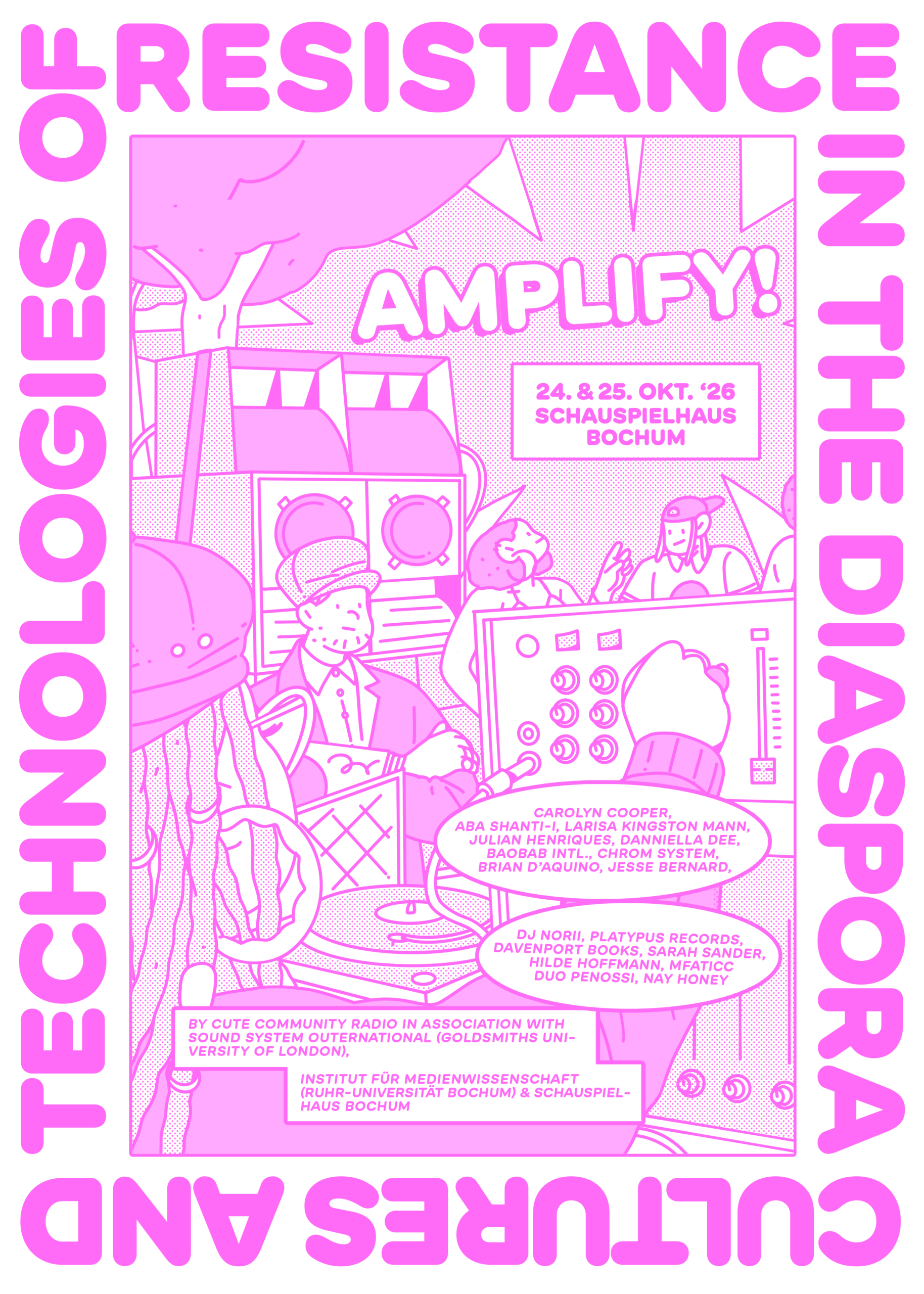
T.A.Z. – Temporary Autonomous Zones are spaces that resist dominant power structures and open up room for self-organization, experimentation, and alternative forms of collective living. By understanding the T.A.Z. (as proposed by Hakim Bey 1985) not simply as a political concept but as a cultural practice, the seminar askes how counter-public spheres emerge through art, music, grassroot media, and self-organized communities. Using Bochum as a model, we will explore how independent cultural institutions, community radio, alternative archives, migrant and post-migrant self-organizations, and queer spaces create alternative infrastructures of culture, solidarity and belonging. Therefore, the seminar introduces key concepts related to counter-publics, cultural activism, postmigration, and speculative thinking (like Nancy Fraser’s Rethinking the Public Sphere,Hakim Bey’s Temporary Autonomous Zone, Judith Butler’s Notes Towards a Performative Theory of Assembly, Caglar and Glick Schiller’s Migrants & City-Making, and Saidiya Hartman’s Wayward Lives, Beautiful Experiments), and visits local initiatives like Cute Community Radio, Kulturbahnhof Langendreer, Kemnade Archive, and atelier automatique to investigate how artistic and cultural practices can become agents of social change. Our overall aim is to develop concepts for the future of a post-migrant city, entitled “Temporary Autonomous Zone: Bochum 2047”.
METHOD
The seminar alternates between classroom sessions devoted to theoretical discussions and field trips to local initiatives, cultural institutions, and (post-)migrant self-organizations. It combines critical reading with ethnographic observation, archival exploration and speculative writing. Rather than treating the visited initiatives merely as research objects, we understand them as active collaborators in producing knowledge about urban futures. Building on our field trips and Saidiya Hartman’s concept of critical fabulation, we will reflect on existing forms of self-organization while imagining further possible post-migrant futures for Bochum.
FORMS OF EXAMINATION
Text readings, group discussions, ethnographic notes as well as an individual (group) project connecting theory and fieldwork. The individual (group) projects may take the form of audio features or podcasts, digital maps of counter-public spaces, multimedia projects building on interviews, photography, sound recordings and critical reflection, or speculative essays imagining a future cultural institution, archive, or autonomous space in Bochum 2037".
REQUIREMENTS FOR THE AWARDING OF CREDIT POINTS
Regular attendance and active participation in the seminar discussions and excursions as well as completion of an individual (group) project for an ungraded module (5/6 ECTS, BA).
An additionalseminar paper must be completed for a graded module (8 ECTS BA), (10 ECTS, MA).
- Kursleiter/in: Sarah Sander