
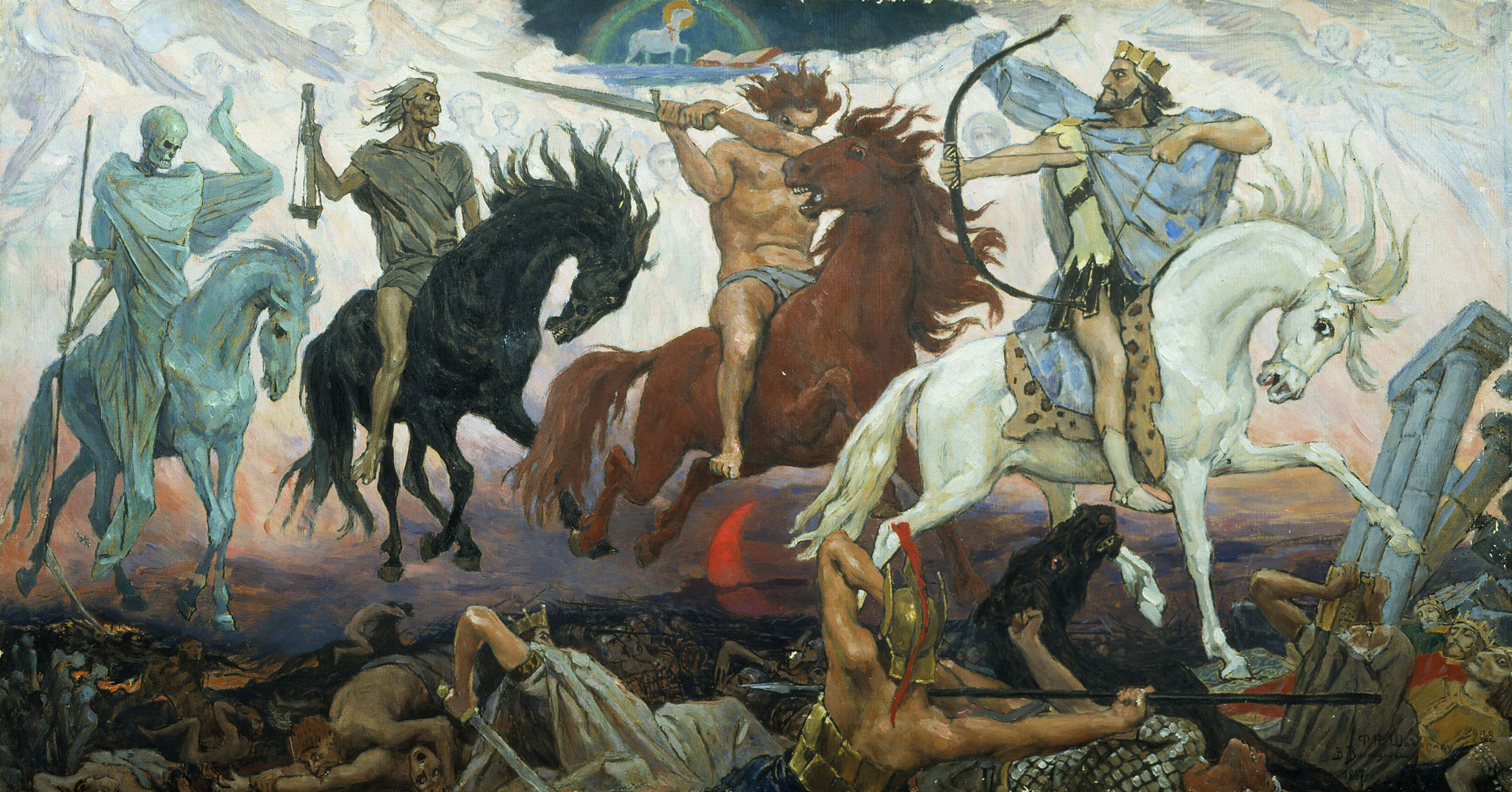
Remember how the world ended in 2012 (at the much-ballyhooed end point of the Mayan calendar)? No? Well, that's because it didn't, but scenarios of the apocalypse were as ubiquitous back then as they had ever been. And also today, in light of the ongoing climate crisis, a war in Europe, and renewed nuclear anxieties, apocalyptic narratives and motifs can be seen often in popular discourse.
While products of popular culture, particularly the mainstream Hollywood film, mine biblical sources as well as secular imaginations of the end of the world for their potential spectacle, the apocalypse is also a mainstay in e.g. the creeds of several religious communities and the rhetoric of politics, indicating that, especially in the US, there is a widespread cultural affinity to prophecy and doomsday scenarios that exceeds the mere pleasure of watching things get destroyed.
In this class, we will ask how this culture of precariousness is constructed and how it is situated in a field of tension between faith, fear, and other constituent factors. In examining the history and cultural functions of the concept of 'the apocalypse' as well as its appropriation in different media, we will thus analyze a broad variety of texts ranging from the Book of Revelation to contemporary Hollywood cinema.
Relevant reading materials will be made available in a Moodle class.
Assessment/requirements: Übung: active participation and short written test; Seminar: the above plus full exam or 12-15-page term paper.
- Kursleiter/in: Matthias Johannes Zucker