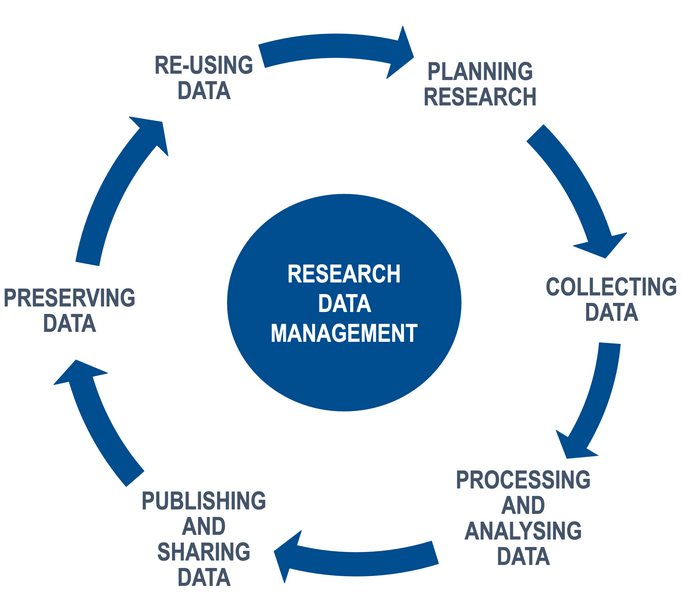
The course covers fundamental concepts and current developments in modern RDM, with a strong emphasis on FAIR principles and their role in scientific workflows. Students examine how well-organized and richly annotated data supports data sharing, reproducibility, and the application of artificial intelligence and machine learning (AI/ML). The course discusses Data Management Plans (DMPs), metadata standards, ontologies, and controlled vocabularies, highlighting their importance for human understanding, data reuse, and machine-actionable research data.
Students explore major research infrastructures and repositories, including Zenodo, OSF, EOSC, and domain-specific platforms, as well as the NFDI consortia and their approaches to RDM. Case studies from materials science, particularly NOMAD and MatInf, illustrate domain-specific challenges and show how curated data supports data-driven discovery and materials informatics. Throughout the semester, students prepare literature reviews, present their findings, and discuss the opportunities and limitations of applying AI/ML in research workflows. The course concludes with a discussion of future directions, including automated metadata generation, intelligent data infrastructures, and the broader impact of AI on scientific data management.
- Kursleiter/in: Thorsten Berger
- Kursleiter/in: Victor Dudarev
- Kursleiter/in: Alfred Ludwig